
Crawl Space Waterproofing in Columbus, OH
Waterproofing is about liquid water: where it comes from and how to stop it arriving. Encapsulation is about vapor. In Central Ohio the two get confused because the wet season is quiet.
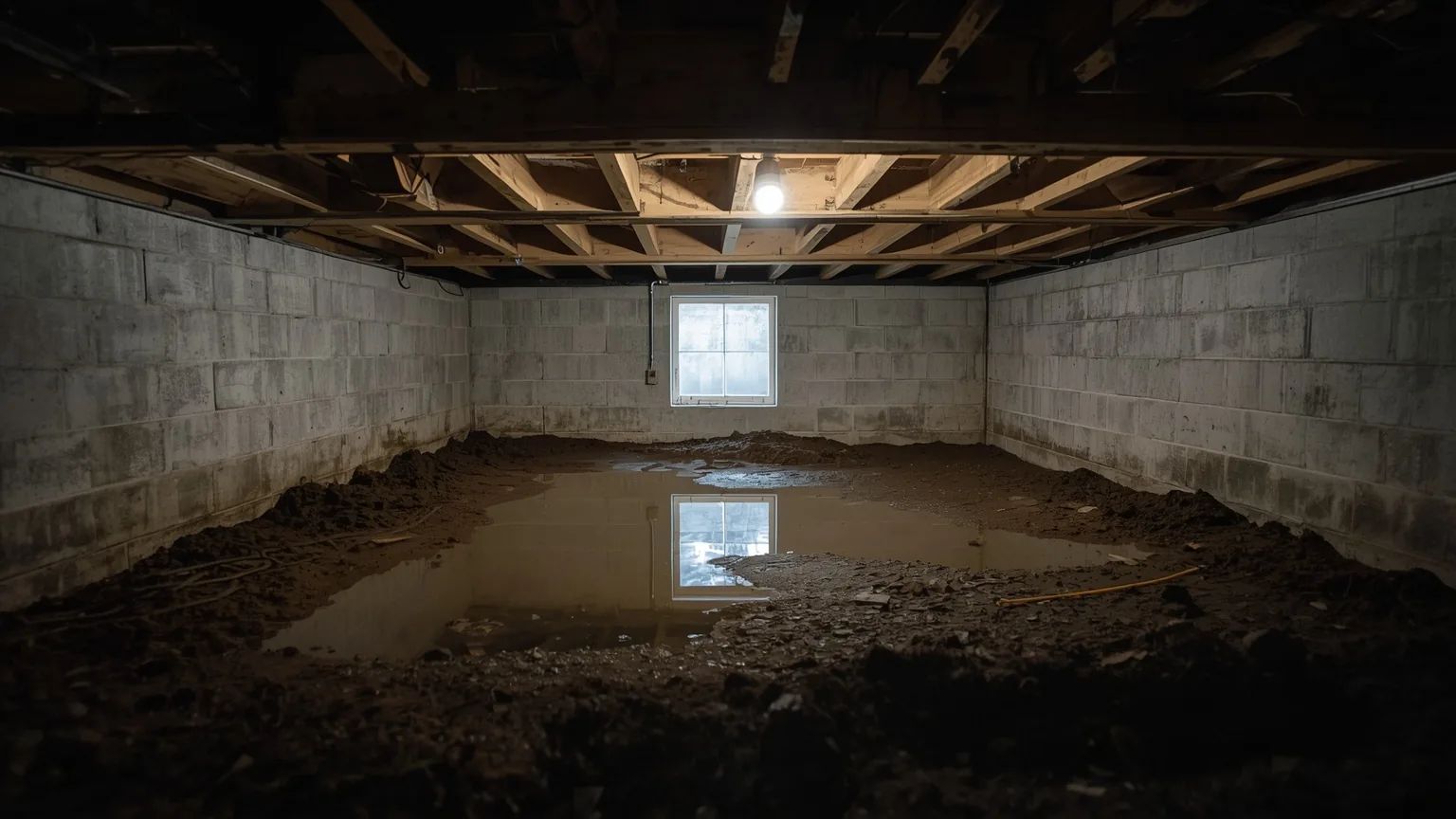
Who handles crawl space waterproofing in Columbus, OH?
Columbus Crawl Space Solutions arranges crawl space waterproofing across Columbus and Central Ohio. Waterproofing addresses liquid water — roof runoff, grading, snowmelt and a seasonally perched water table — through grading, gutters and downspouts, perimeter drainage and sump systems. It is a different problem from humidity, and the cheap external causes get ruled out before anything is excavated. Call (614) 350-6868 to arrange an evaluation.
Waterproofing and encapsulation are not the same job
This is the most useful distinction on the site and the one most often blurred in a sales conversation.
Encapsulation seals the space against ground vapor and humid outside air. It does nothing whatsoever about liquid water. Waterproofing keeps liquid water from reaching or remaining in the space. A crawl space can genuinely need one, the other, both, or neither.
They do overlap. A complete solution to a wet Central Ohio crawl space often ends with a sealed liner, because once water is controlled the remaining problem is vapor. But the sealing is the last step in that sequence, and a quote that leads with encapsulation for a space that takes water every spring has the order backwards.
Where the water is actually coming from
Most wet crawl spaces here are wet for reasons visible from the yard rather than from underneath.
- Gutters and downspouts. A downspout discharging at the foundation puts a roof's worth of water into the ground beside the crawl space wall. Most common cause, cheapest to correct.
- Grading that has settled. Ground that has slumped back toward the house over the years turns the perimeter into a collection channel.
- Snowmelt against the foundation. Plowed and shovelled snow piled against the wall releases water slowly into ground that is already at its wettest.
- A seasonally perched water table. Water sitting on dense glacial till rather than draining away. Covered below, and it is the one external work alone will not solve.
- Plumbing. A failed supply line or waste pipe produces a wet crawl space with no relationship to the weather at all, which is worth eliminating early.
What the timing tells you
The pattern is genuinely diagnostic and costs nothing to observe. Water appearing within an hour or two of heavy rain and receding soon after is usually surface runoff — the gutter, downspout and grading category, which is comparatively cheap to fix.
Water that shows up a day or more after rain, or with no recent storm at all, points at the ground rather than the sky. Water that tracks the calendar — arriving in late autumn, staying through the spring and clearing in early summer — points squarely at a perched table, and that is where interior drainage and a sump system start to be justified.
Write down what you see and when, with dates and photographs. Most homeowners already have this information and do not realize it is the most valuable diagnostic input available — particularly here, where an August inspection can miss the problem entirely.
The order the work goes in
External causes first, because they are cheap and resolve a large share of cases. Interior drainage next, if water genuinely arrives through the ground. Then any framing the water damaged. Then sealing and humidity control.
Running that sequence backwards — sealing first — is the most expensive error in this trade, and it is common enough to be worth naming twice.
Central Ohio crawl spaces are wettest in winter
This runs opposite to most of what is written about crawl spaces, because most of it is written for the humid South. The soils under much of Central Ohio are glacial till, and the USDA describes the local series in terms of a perched water table rather than a deep one. Bennington soils are recorded with an intermittent perched water table between half a foot and a foot of the surface from November to May. Cardington and Centerburg sit between one and two feet from November to April. Condit ranges from a foot above the surface to a foot below it.
A perched table is not groundwater rising from far below. It is rain and snowmelt soaking down until it meets dense till that will not pass it, then spreading sideways along that layer — at exactly the depth a crawl space floor sits.
These are not borrowed regional generalities: Bennington, Cardington and Condit were formally described from type locations in Delaware County and Centerburg from Licking County, the counties immediately around Columbus. The practical consequence is that the diagnosis has a season. If your crawl space is wet in March and dry in August, nothing is broken in August — you simply looked at the wrong time of year.
Crawl Space Waterproofing questions
What is the difference between waterproofing and encapsulation?
Waterproofing keeps liquid water out of the crawl space. Encapsulation seals the space against ground vapor and humid air and controls the humidity that remains. A space with standing water needs waterproofing; a space that is merely damp and humid needs encapsulation. Many need both, in that order.
Why is my crawl space wet in winter and dry in summer?
Because the ground here holds a perched water table from roughly November to May, and evaporation is at its lowest in the same window. That is the opposite of the humid South, where crawl spaces are worst in August, and it is why a summer inspection in Central Ohio can miss a real water problem.
Will fixing my gutters solve a wet crawl space?
Sometimes, and it is cheap enough to be worth doing first regardless. Downspouts discharging at the foundation are the most common single cause. If the water is a perched table rather than runoff, gutters will not be enough, and the timing of when water appears is the clue.
Can standing water be left if the crawl space is sealed?
No. A liner over standing water hides it rather than resolving it, keeps it against the ground and foundation, and removes the evaporation that was at least partly clearing it. Water is dealt with before anything is sealed.
Is a wet crawl space an emergency?
Rarely an emergency, but it does not improve on its own and the damage is cumulative across seasons. Water near live electrical equipment is the exception and should not be investigated personally.
Related crawl space services
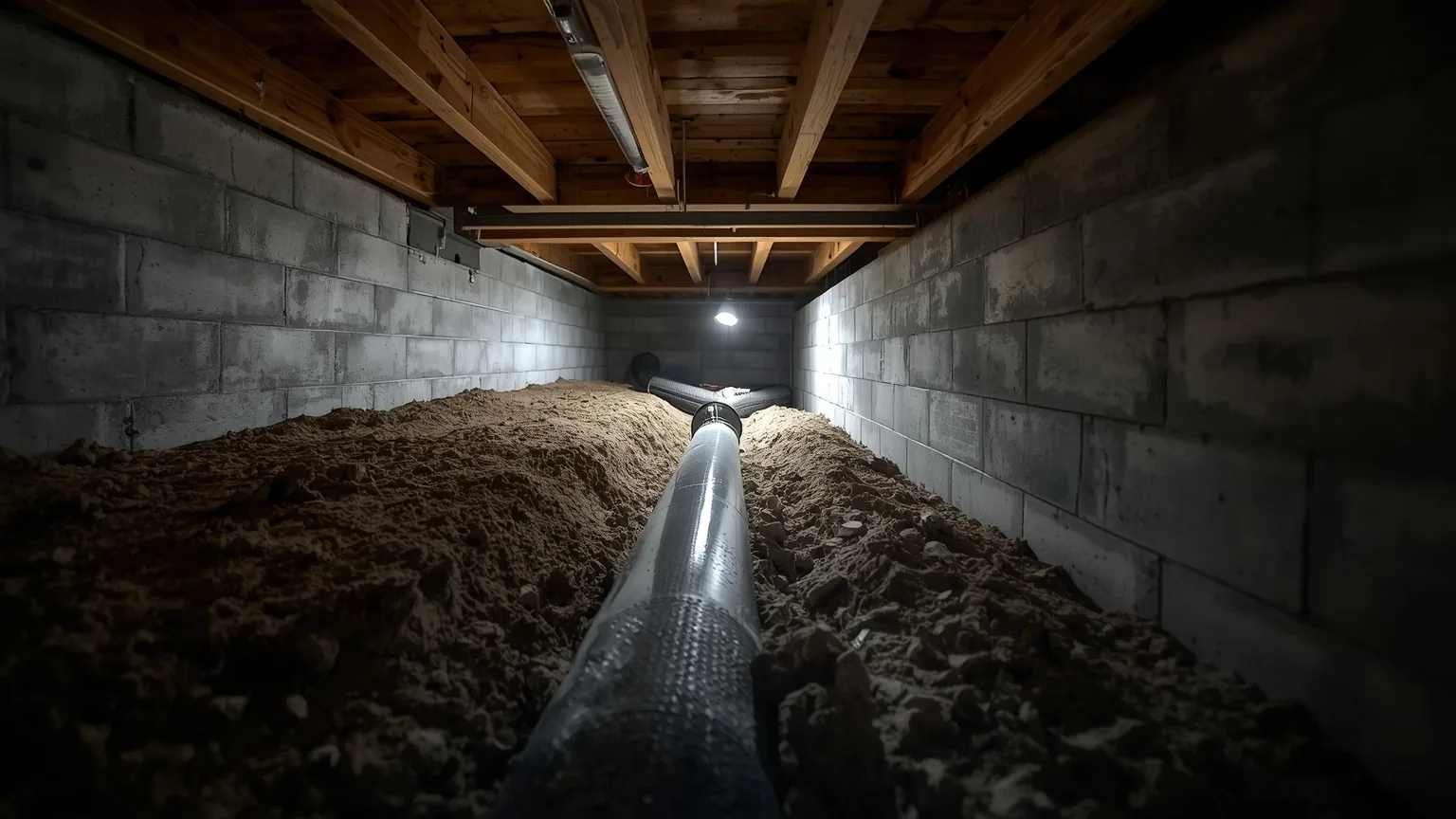
Crawl Space Drainage
A route out for water, once the cheap causes are eliminated.
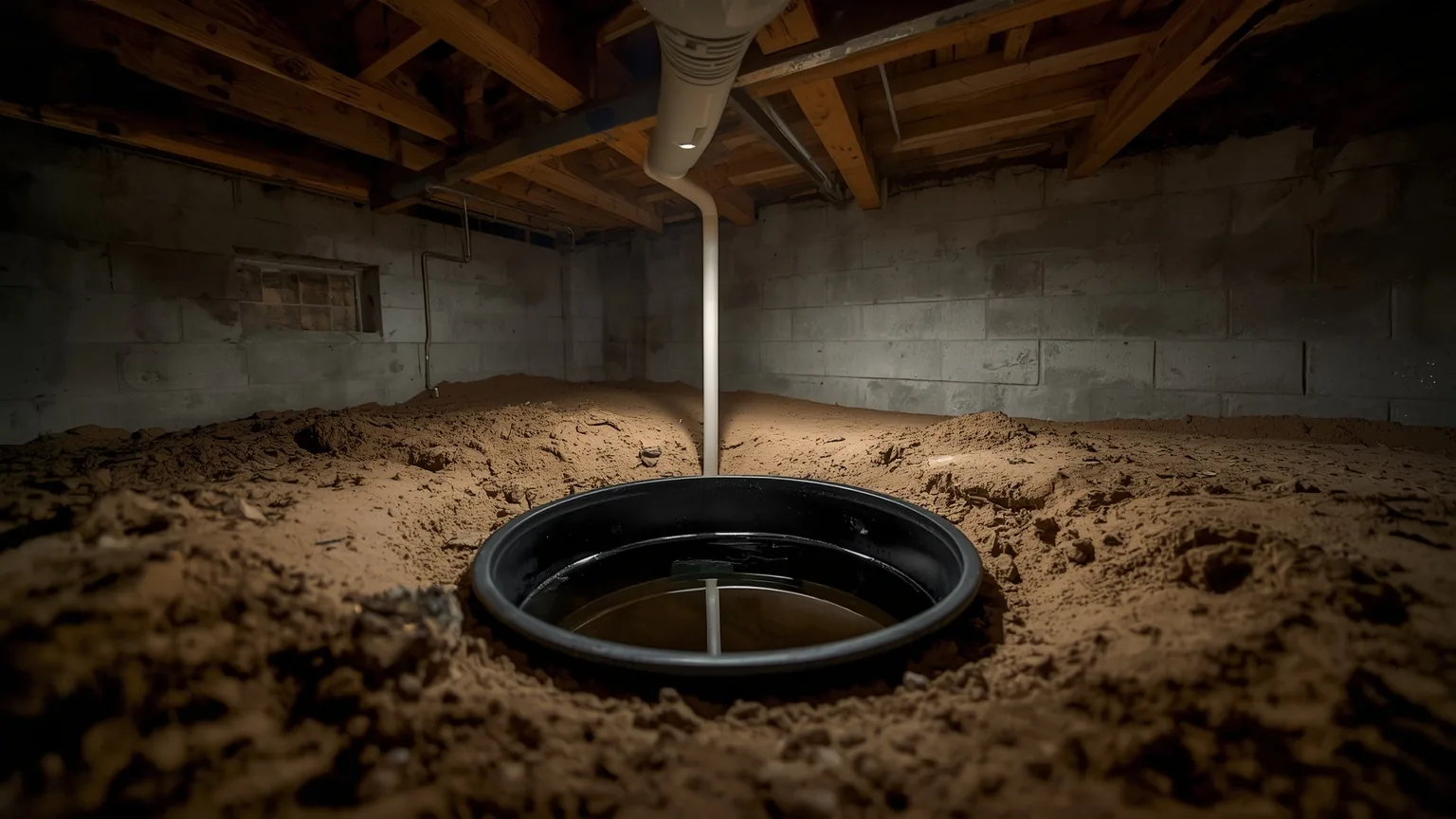
Crawl Space Sump Pumps
Basin, pump and discharge — and the line that freezes.
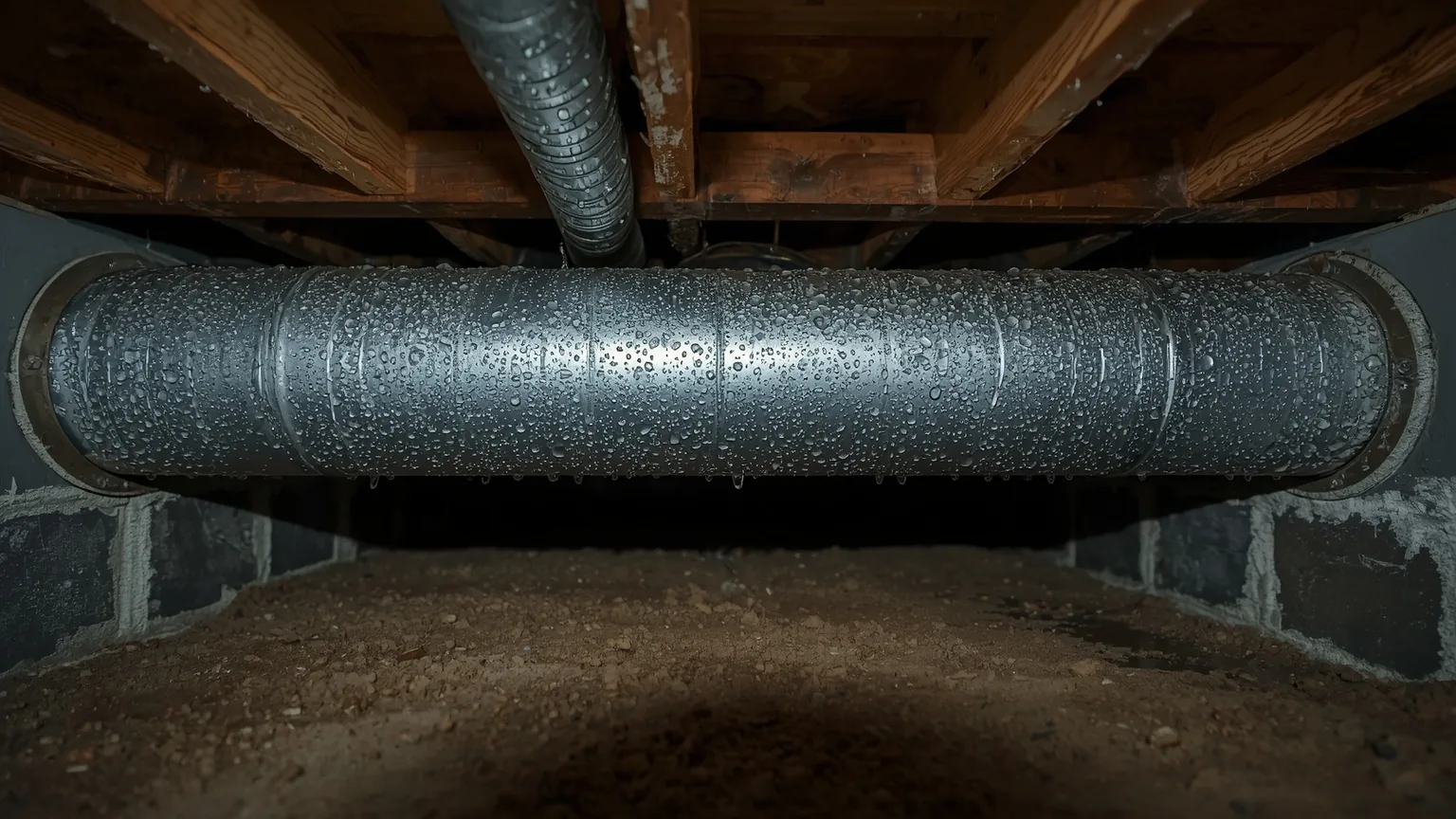
Crawl Space Moisture Control
Identifying the source before choosing the remedy.
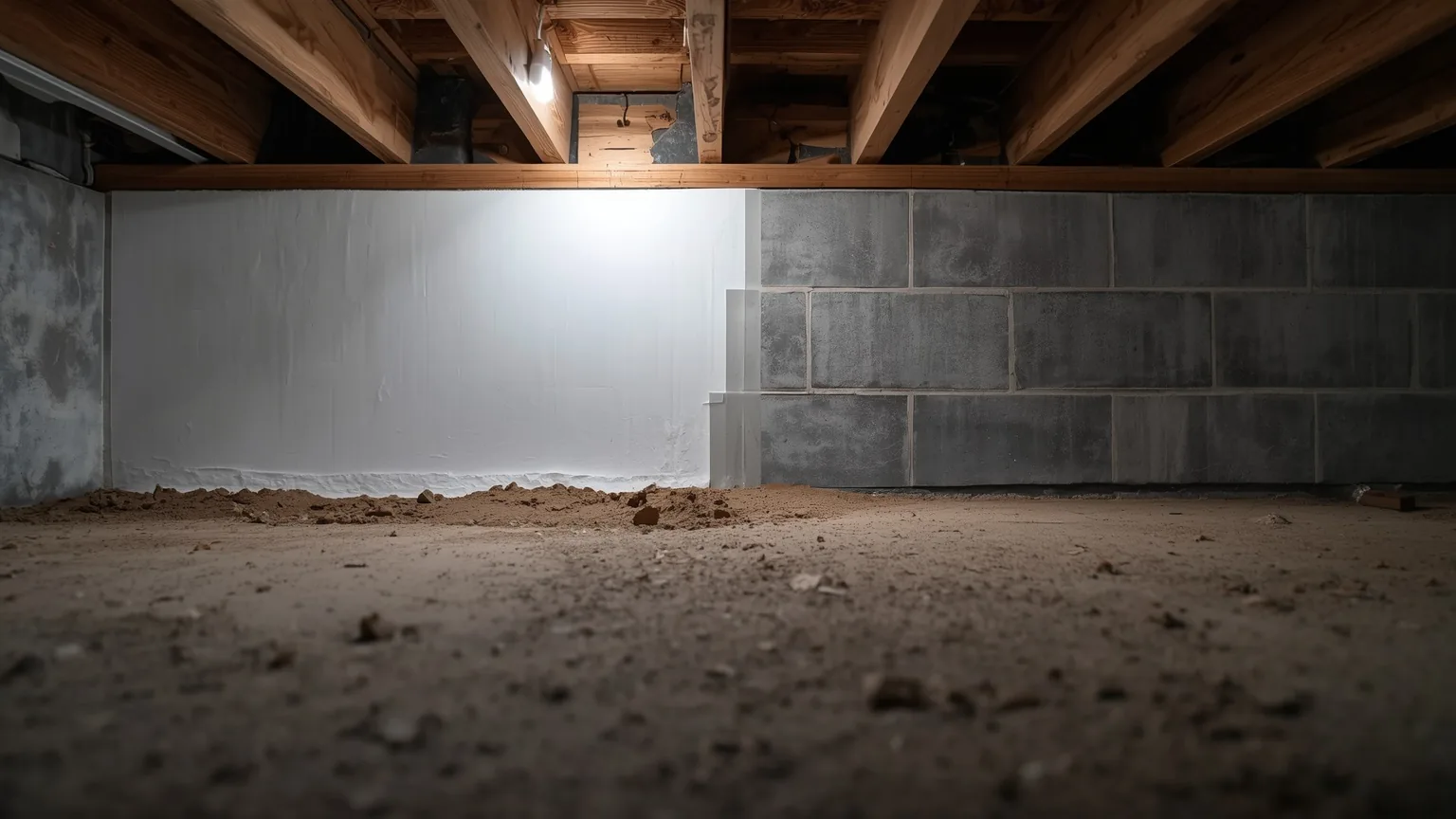
Crawl Space Encapsulation
The full sealed system — liner, closed vents and managed humidity.
Find out what is actually causing it.
An inspection underneath, readings taken on site, and a written scope ahead of any figure.