
Crawl Space Dehumidifier Installation in Columbus, OH
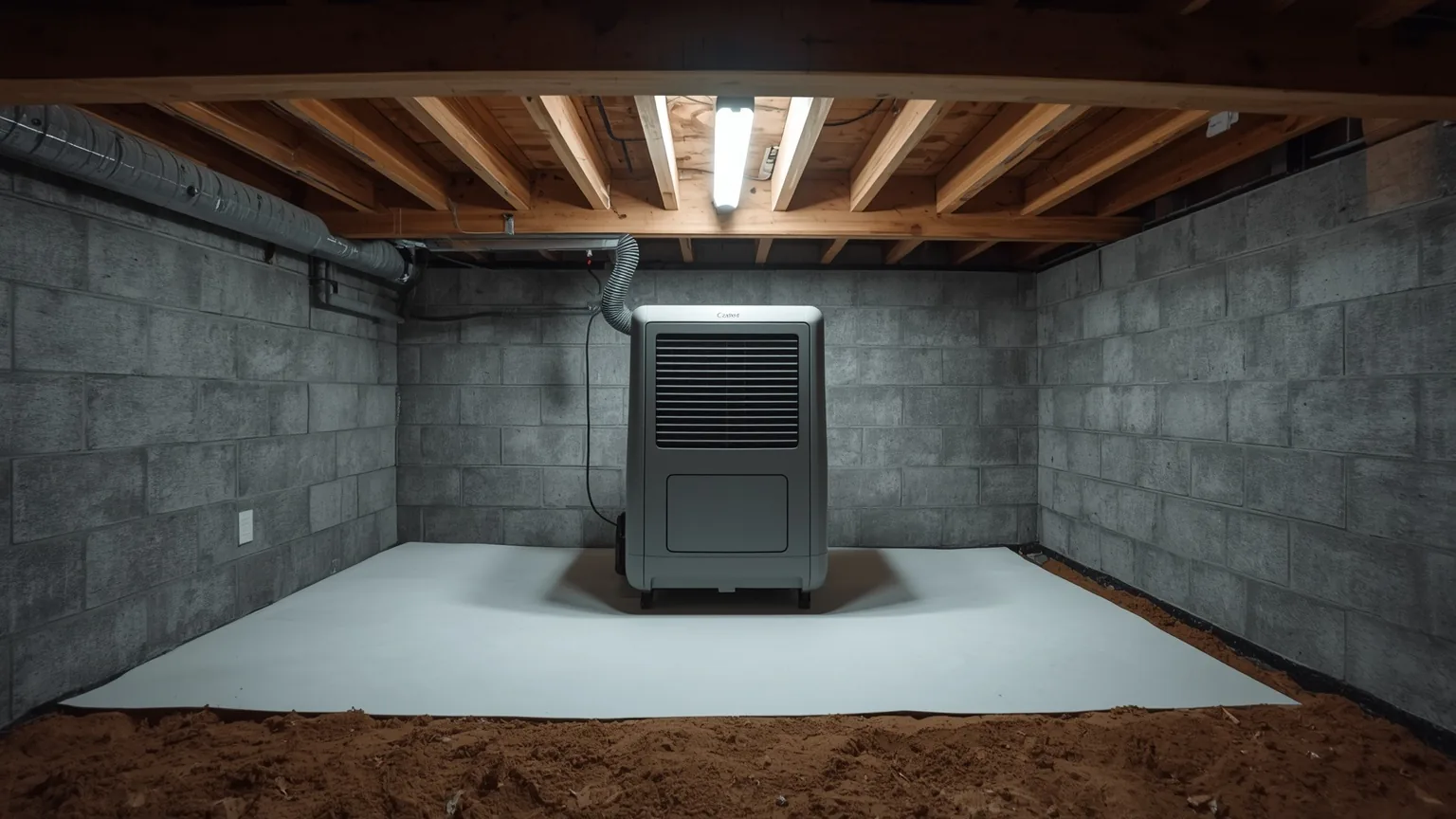
A dehumidifier is one of four ways Ohio's code lets you condition a sealed crawl space. Unlike the model code, Ohio tells you exactly how big it has to be.
Who handles crawl space dehumidifiers in Columbus, OH?
Columbus Crawl Space Solutions arranges crawl space dehumidifier installation across Columbus and Central Ohio. A dedicated unit is warranted where a space has been sealed and needs its humidity actively managed. Ohio's code specifies the capacity rather than leaving it to the manufacturer, which makes it one of the few crawl space line items a homeowner can check with a calculator. Call (614) 350-6868 to arrange an evaluation.
When a dehumidifier is the right call
A dehumidifier removes moisture from air. It is therefore the right tool for a sealed space whose remaining problem is humidity, and the wrong tool for almost everything else.
In a vented crawl space it is close to pointless — the unit is dehumidifying the outdoors through the foundation openings, running constantly and achieving very little. In a space taking on liquid water it treats a symptom while the source continues, and here that source is seasonal, so a unit installed in August can look like it is working right up until March.
The condition under which it earns its cost is a space that has been sealed, has no active water entry, and needs its humidity held down. That is why it belongs in the conversation after sealing and after any water work, not instead of them.
Condensate, in a climate that freezes
A crawl space dehumidifier pulls water out of the air continuously and that water needs a designed route out: a gravity drain to a suitable point, or a condensate pump where gravity will not do it. A unit draining into a reservoir somebody is expected to empty is not a crawl space solution, because nobody goes down there.
The Columbus-specific part is what happens to that route in January. A condensate line running to an exterior discharge in an unconditioned crawl space is a small-diameter pipe carrying a trickle of water through a space that sees close to a hundred freezing nights a year. Where the line terminates, how it is pitched and whether it is protected all matter more here than in a mild market.
Condensate lines are a routine failure point regardless — they block, they get knocked loose, and the first sign is often water on the liner. The arrangement should be inspectable without dismantling anything.
Living with one
These units run for years in an environment nobody visits. Filters need cleaning, coils collect dust, and the drain needs checking. A humidistat that has drifted or a unit that has quietly stopped can go unnoticed for a whole season.
The practical answer is a humidity readout visible without crawling underneath, and a reminder to actually look at it — ideally twice a year, at the two points where this climate changes gear.
Ohio put a number in the code. Most states did not.
This is the most checkable line on any Columbus encapsulation quote, and almost nobody volunteers it.
The model International Residential Code, which most states adopt broadly as written, accepts dehumidification as a crawl space conditioning method but requires only that it be "sized in accordance with manufacturer's specifications" — a clause almost any unit satisfies. Ohio replaced that. Section 408.3 item 2.4 of the Residential Code of Ohio, rule 4101:8-4-01, requires dehumidification sized to provide 70 pints of moisture removal per day for every 1,000 square feet of crawl space floor area.
The arithmetic fits on the back of a quote. A 1,200 square foot crawl space calls for at least 84 pints per day; 2,000 square feet calls for at least 140. If a proposal seals your crawl space and specifies a unit well under that figure, the question to ask is which of the four accepted methods the design is actually relying on — because if the answer is dehumidification, the capacity is not a matter of opinion.
Crawl Space Dehumidifiers questions
What size dehumidifier does Ohio require in a crawl space?
Where dehumidification is the conditioning method for a sealed crawl space, Section 408.3 item 2.4 of the Residential Code of Ohio requires it to be sized to provide 70 pints of moisture removal per day for every 1,000 square feet of crawl space floor area. A 1,500 square foot space therefore points to at least 105 pints per day.
Do Columbus crawl spaces need dehumidifiers?
Only sealed ones, and only if dehumidification is the conditioning method chosen. Ohio's code accepts four: mechanical exhaust, a conditioned air supply, a plenum arrangement, or dehumidification. What matters is that the scope names one of the four rather than sealing the space and stopping.
Will a dehumidifier work in a vented crawl space?
Not usefully. With the foundation openings open, the unit is attempting to dehumidify outdoor air, so it runs continuously, costs money to operate and achieves very little. Sealing comes first, then conditioning the sealed space.
Can I use a household dehumidifier?
It is generally a poor fit. Consumer units are built for conditioned rooms, usually rely on a reservoir rather than a permanent drain, and lose efficiency at crawl space temperatures — which in Central Ohio are low for a good part of the year. Dedicated units are built for continuous unattended running.
Where does the condensate go?
To a designed drain point by gravity, or to a condensate pump where gravity will not do it. Never a reservoir requiring manual emptying. In this climate the freeze risk on the discharge route is worth raising specifically, along with how the line is pitched and protected.
Related crawl space services
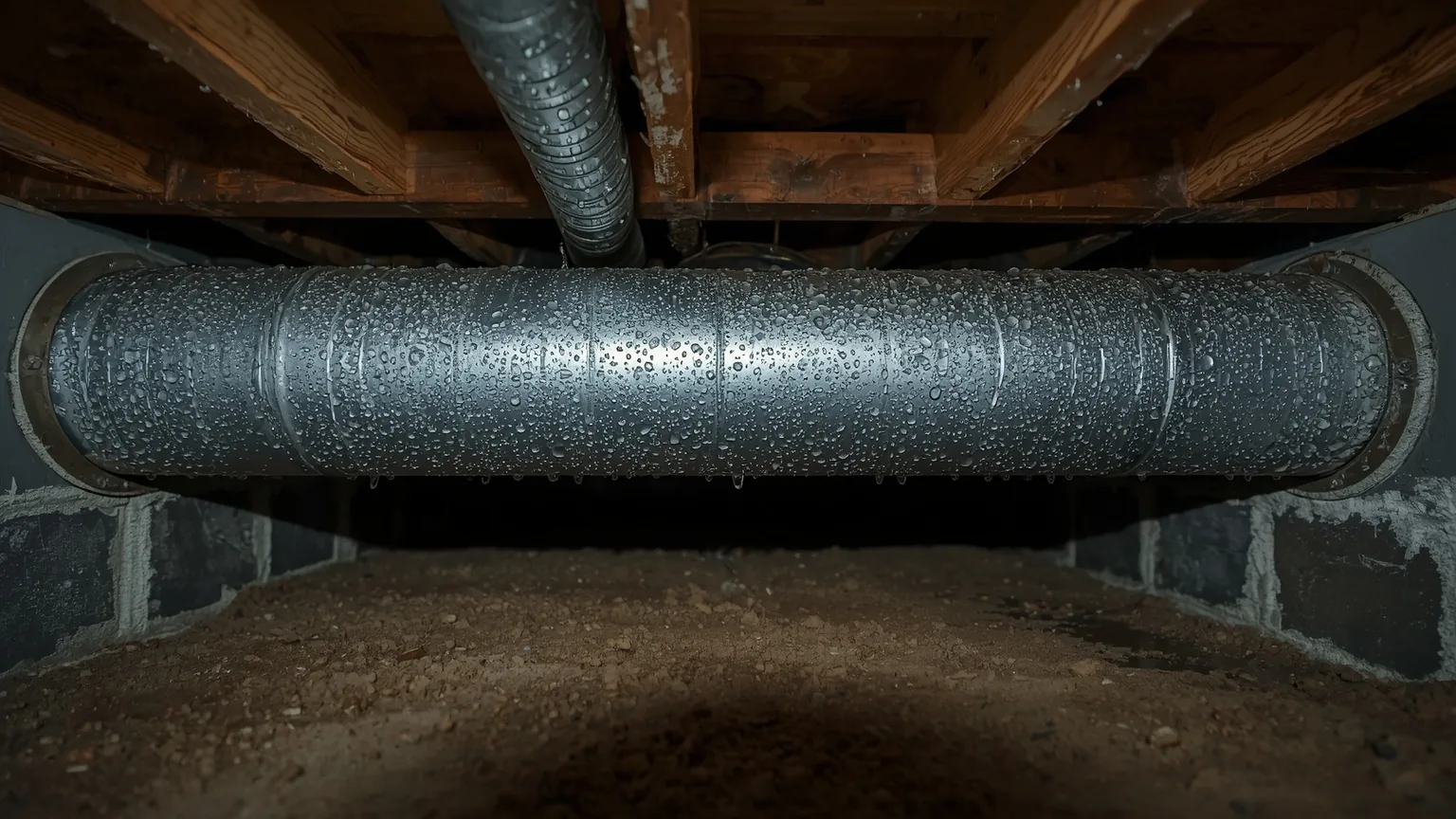
Crawl Space Moisture Control
Identifying the source before choosing the remedy.
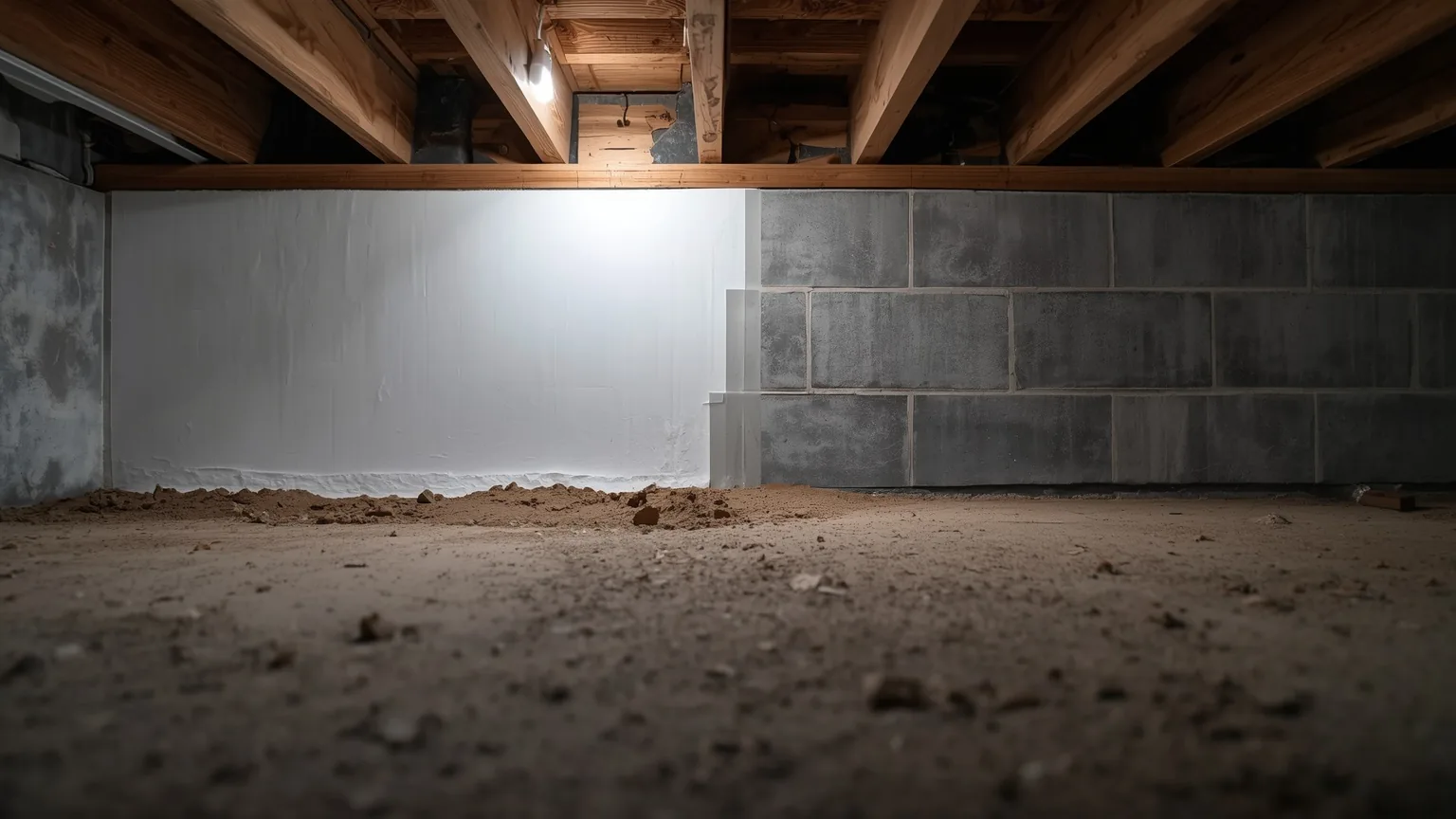
Crawl Space Encapsulation
The full sealed system — liner, closed vents and managed humidity.
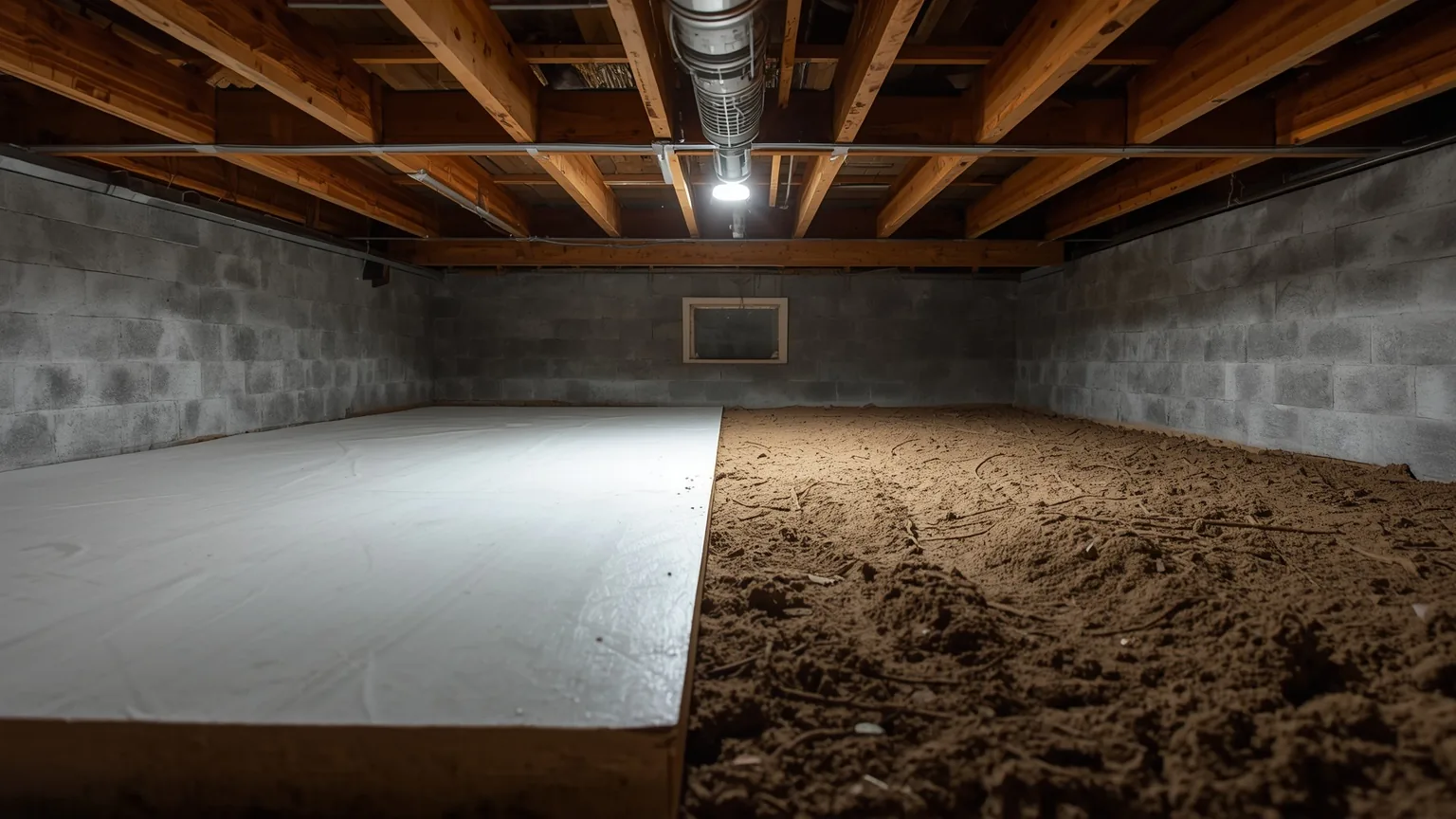
Crawl Space Encapsulation Cost
The variables behind the spread — and why one number cannot be honest.
Vapor Barrier Installation
Ground cover that stops soil moisture — and what it does to code.
Find out what is actually causing it.
An inspection underneath, readings taken on site, and a written scope ahead of any figure.