
Crawl Space Drainage in Columbus, OH
Drainage gives water a route out. Before anyone cuts a trench, the cheaper question is whether the water needed to arrive in the first place.
Who handles crawl space drainage in Columbus, OH?
Columbus Crawl Space Solutions arranges crawl space drainage across Columbus, Franklin County and the surrounding counties. Drainage collects liquid water and routes it away. Surface causes — gutters, downspouts, grading and snow piled against the foundation — get ruled out first, because they are far cheaper to correct. Where the ground itself is delivering the water, interior drainage and a sump become the honest answer. Call (614) 350-6868 to arrange an evaluation.
The outside gets checked first
Gutters discharging beside the foundation, downspouts ending at the wall, grading that has settled back toward the house, and snow shovelled into a pile against the crawl space wall are all common, cheap to correct, and responsible for a great many wet crawl spaces.
An evaluation proposing interior excavation without anyone having walked the outside has skipped the step that might have solved the problem for a small fraction of the cost. It is fair to ask what was found out there and to expect a specific answer.
What interior drainage involves
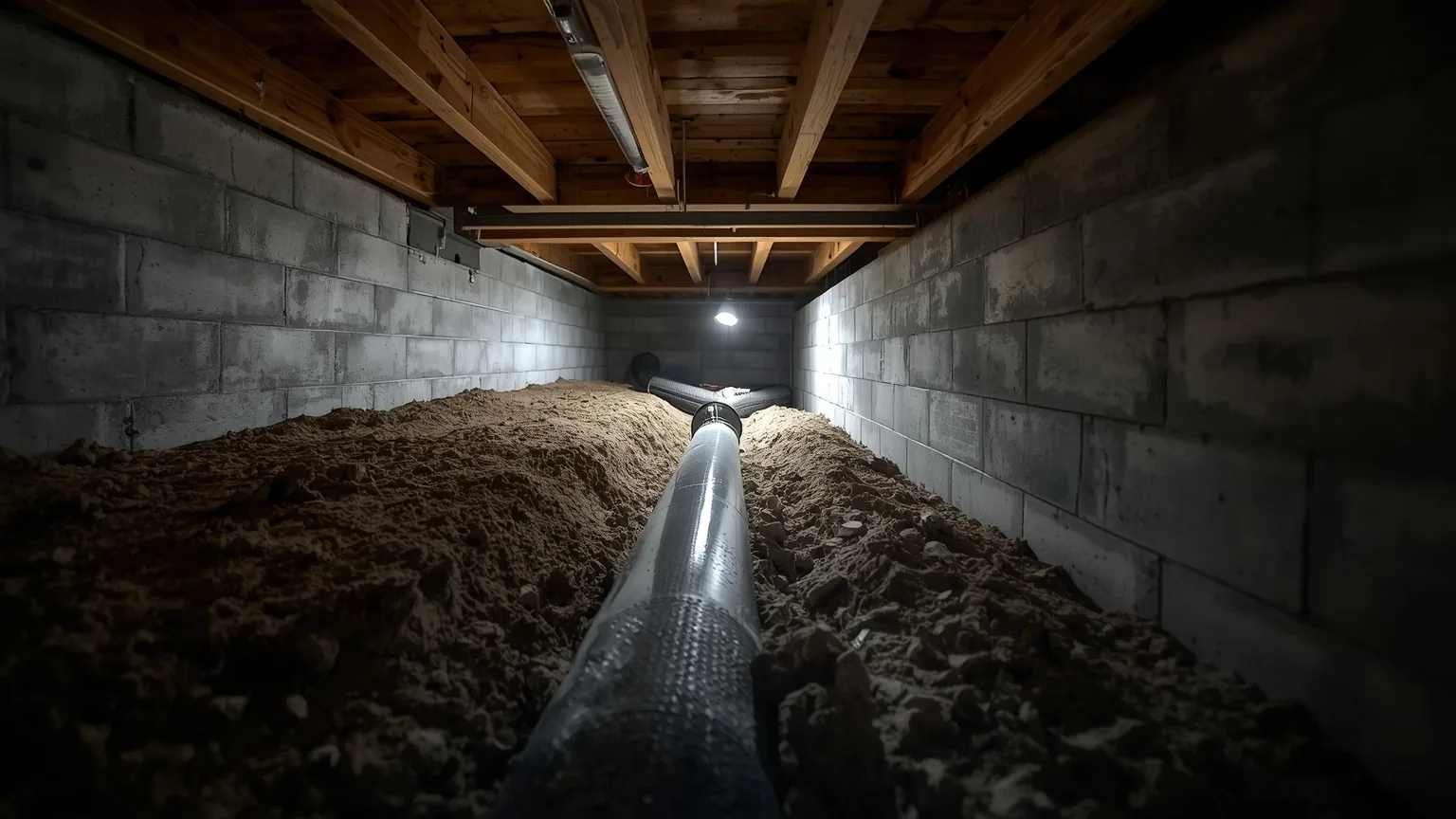
Where water genuinely arrives through the ground, the work is a channel cut around the perimeter of the crawl space floor, bedded in washed stone and carrying a perforated pipe to a collection point. From there a sump pump lifts it and discharges it clear of the foundation.
This is excavation under an occupied structure, close to footings and often close to services. It is not homeowner work, and this page deliberately does not describe how to do it. What a homeowner should expect is a clear account of where the channel runs, where it collects, where the discharge goes, and what happens to the spoil.
Drainage relative to everything else
Drainage handles liquid water. Waterproofing is the wider effort to stop water reaching the space at all, of which drainage is one part. Encapsulation handles vapor and humidity and does nothing about liquid water.
Water first, then any framing the water damaged, then sealing and humidity. Sealing over an unresolved water source is the most expensive sequence error available in this trade.
Water moves sideways here, not down
The mechanism under most of Central Ohio is not a deep water table rising. It is a perched one, and the difference decides what a drainage system has to do.
Glacial till is dense. Rain and snowmelt soak down until they reach it, and then stop going down. What happens next is lateral: the water spreads along the top of that layer, following whatever fall exists, and a crawl space excavation sitting at that depth becomes a convenient low point for water traveling sideways through the soil.
The USDA descriptions of the local series say this in their own way, recording an intermittent perched water table at half a foot to two feet below the surface from roughly November to May, depending on the series. It explains something homeowners find counterintuitive — that water can appear in a crawl space days after any rain, on a lot that visibly drains well at the surface. The surface is not where the water is traveling.
Crawl Space Drainage questions
Do I need interior drainage or just better gutters?
Timing points at the answer. Water appearing within an hour or two of rain and receding soon after is usually surface runoff, which gutters, downspouts and grading correct cheaply. Water that arrives in late autumn and stays until spring points at the ground, and that is where interior drainage is justified.
Does every crawl space need drainage?
No. Drainage addresses liquid water. A crawl space that is humid but never takes on water has a vapor or air problem, and a drainage system would not change it. Installing one there is money spent on the wrong mechanism.
Why does water sit in my crawl space instead of soaking away?
Because much of Central Ohio sits on dense glacial till. Water soaks down until it meets that layer, then spreads sideways along it rather than continuing down. At crawl space depth that means water arriving from the side and staying, which is why 'the ground will absorb it' is not a safe assumption here.
Can I dig a drainage trench myself?
Surface work such as extending downspouts, correcting grading and moving snow away from the foundation is reasonable homeowner work and often the highest-value thing you can do. Interior drainage is excavation under an occupied structure near footings and services, and is not.
When should drainage work be scheduled?
Diagnosis is best done when the ground is wet, which here means late autumn through spring. The work itself is easier in drier months. That ordering — observe in the wet season, install afterward — is what stops a system being designed around a problem nobody actually watched.
Related crawl space services
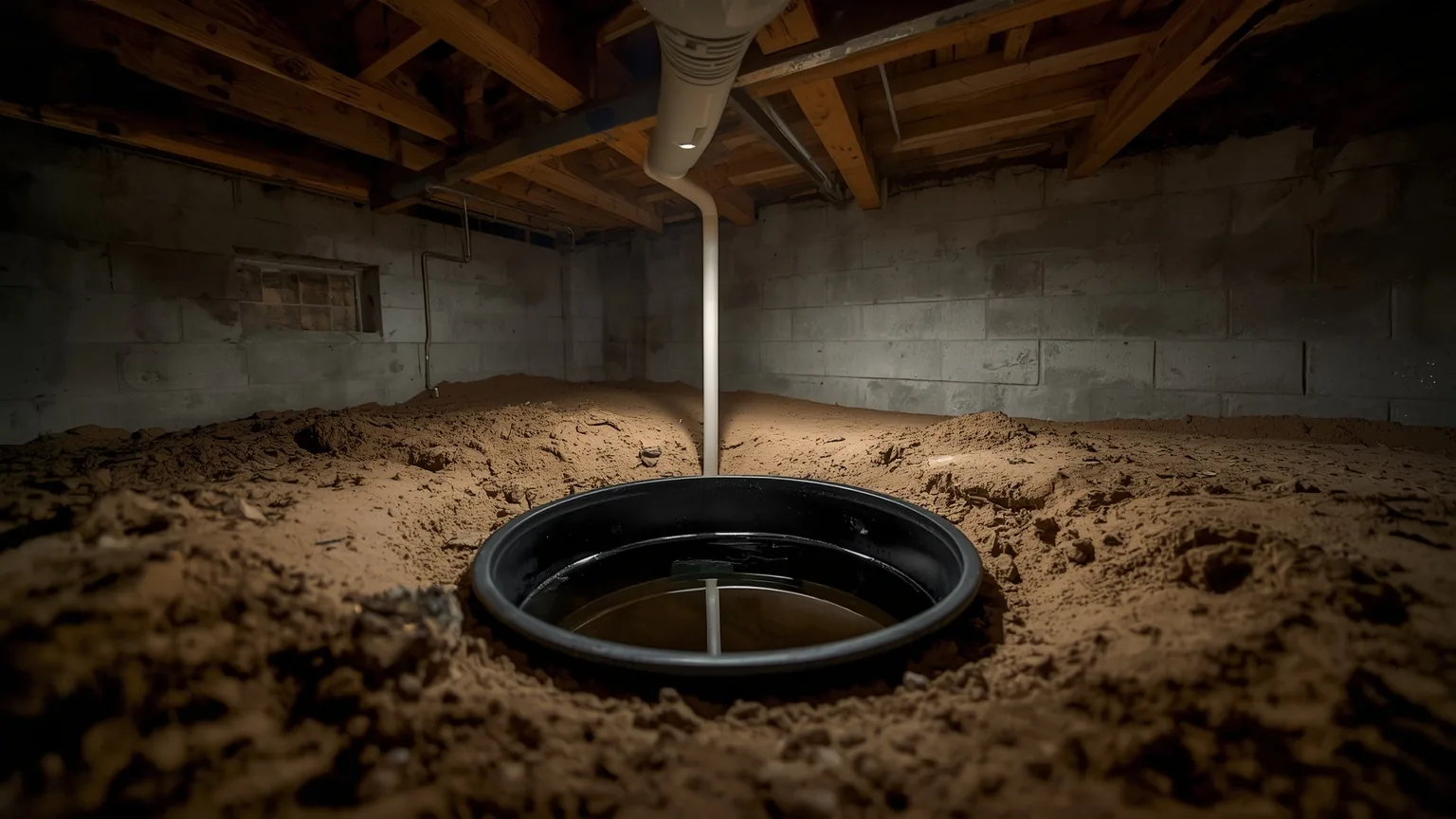
Crawl Space Sump Pumps
Basin, pump and discharge — and the line that freezes.
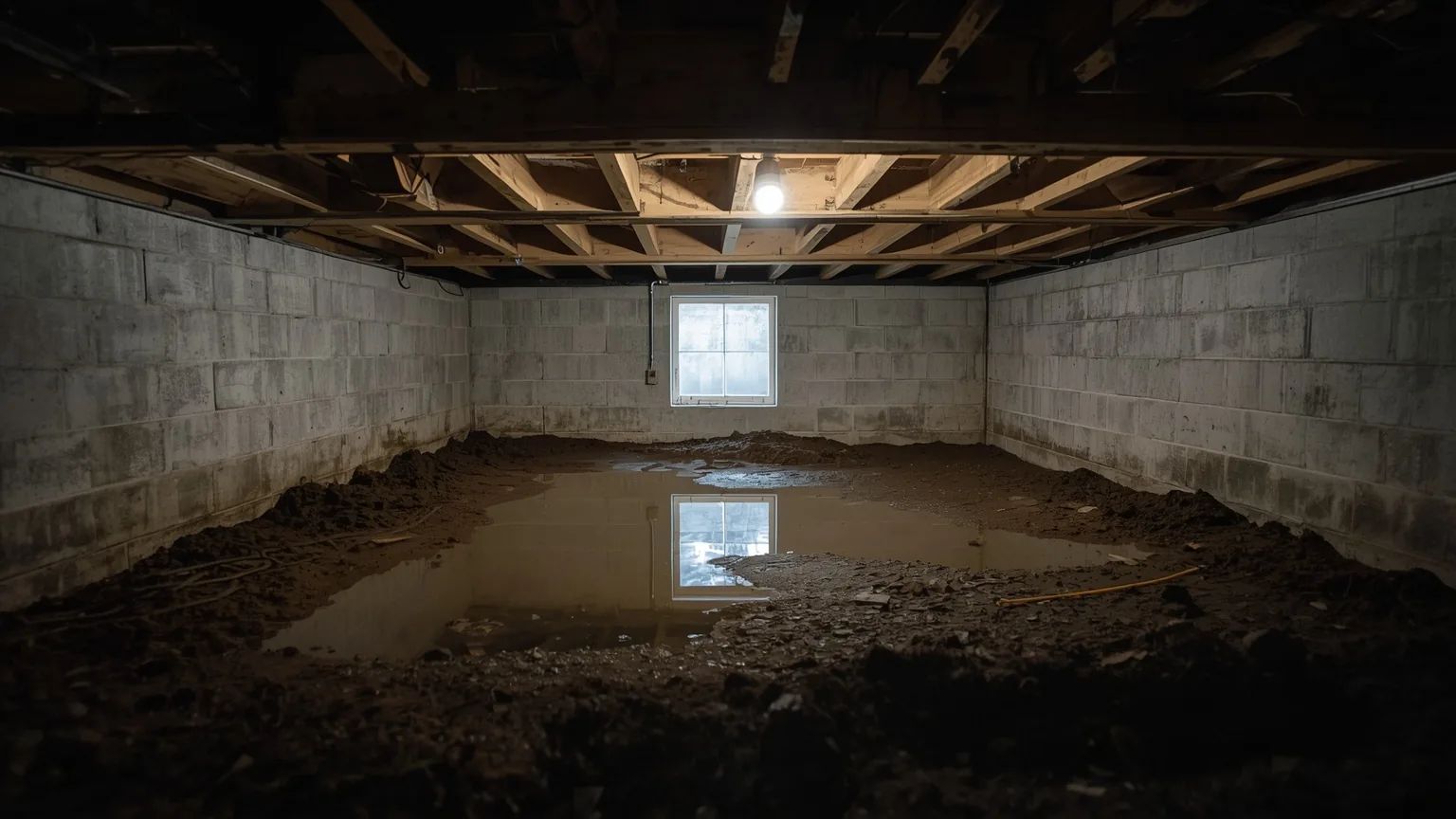
Crawl Space Waterproofing
Stopping liquid water from arriving — outside causes checked first.
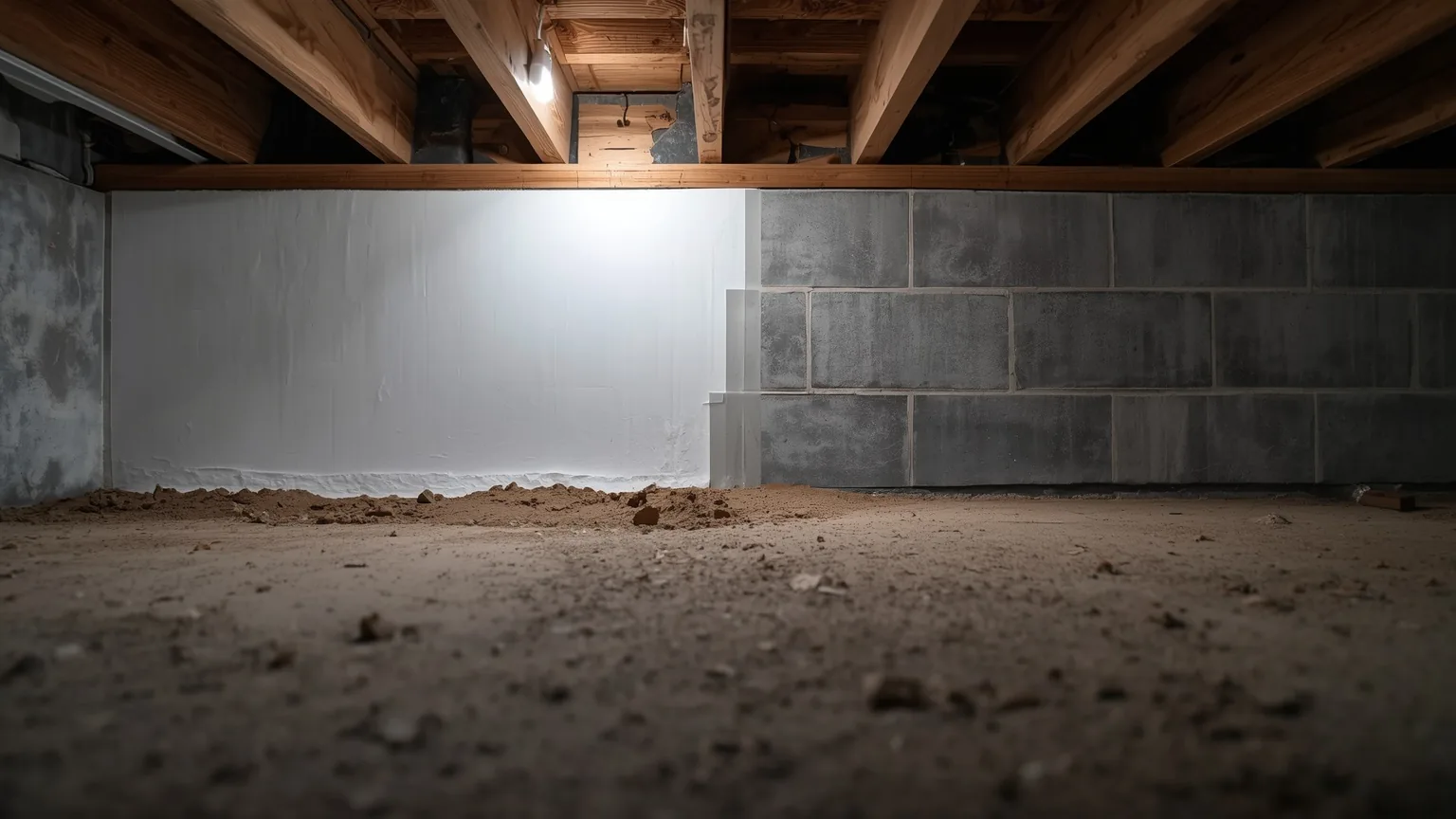
Crawl Space Encapsulation
The full sealed system — liner, closed vents and managed humidity.
Crawl Space Moisture Control
Identifying the source before choosing the remedy.
Find out what is actually causing it.
An inspection underneath, readings taken on site, and a written scope ahead of any figure.